 Business License

OEM vs ODM POS Manufacturing: What Is the Difference and Which One Is Right for Your Business?
Introduction
When businesses plan to launch their own POS products, choosing the right manufacturing model is one of the most important decisions.
Many companies want to create branded POS terminals but are unsure whether they should choose:
OEM manufacturing
ODM manufacturing
Product specifications
Design requirements
Functional requirements
Branding information
The manufacturer is responsible for production.
For example:
A payment company may already have its own POS application and product concept. They need a hardware partner to produce POS terminals with their brand logo and required configuration.
The factory provides:
Hardware manufacturing
Assembly
Testing
Packaging support
The final product is sold under the customer's brand.
Although these two terms are commonly used in the electronics industry, they represent different levels of cooperation between brands and manufacturers.
Understanding the difference between OEM and ODM can help distributors, software companies, payment providers, and retailers choose the best strategy for developing their own POS solutions.
What Is OEM POS Manufacturing?
OEM stands for Original Equipment Manufacturer.
In an OEM cooperation model, the manufacturer produces hardware according to the customer's requirements.
The customer usually provides:
Advantages of OEM POS Manufacturing
1. Build Your Own Brand Identity
OEM allows companies to create unique branded products.
Businesses can customize:
Logo
Product appearance
Packaging
User experience
This helps companies build stronger market recognition.
For distributors, branded products often provide better customer loyalty compared with selling generic devices.
2. Greater Control Over Product Specifications
With OEM cooperation, customers can define hardware requirements.
Examples:
Processor selection
Memory configuration
Screen size
Printer type
Scanner module
Connectivity options
This allows businesses to create products specifically designed for their target markets.
3. Better Market Differentiation
The POS market is competitive.
Selling the same standard products as many competitors makes price competition difficult.
OEM solutions allow businesses to create unique products with different:
Functions
Designs
Applications
Target industries
This creates stronger competitive advantages.
What Is ODM POS Manufacturing?
ODM stands for Original Design Manufacturer.
In an ODM cooperation model, the manufacturer already has product designs and technical solutions.
Customers can select existing models and customize them according to their requirements.
Customization may include:
Brand logo
Product color
Configuration adjustment
Software adaptation
Packaging
ODM is often faster and more cost-effective than developing a completely new product.
Advantages of ODM POS Manufacturing
1. Faster Product Launch
Developing a new POS terminal from zero requires:
Industrial design
Hardware development
Testing
Certification
Production preparation
This process can take significant time.
ODM allows businesses to use existing mature platforms and enter the market faster.
2. Lower Development Cost
Because the manufacturer already has:
Product design
Engineering experience
Production process
Customers can reduce development expenses.
This is especially beneficial for:
Small businesses
New brands
Startups
3. Lower Technical Risk
A mature ODM product has already gone through:
Engineering verification
Production testing
Market feedback
This reduces the risk of unexpected hardware problems.
OEM vs ODM: Key Differences
| Feature | OEM | ODM |
|---|---|---|
| Product Design | Customer provides requirements | Manufacturer provides design |
| Customization Level | Higher | Medium |
| Development Time | Longer | Faster |
| Cost | Higher | Lower |
| Best For | Established brands | New brands and distributors |
| Product Uniqueness | Very high | Moderate |
Which Manufacturing Model Should You Choose?
Choose OEM If:
You want:
A completely unique POS product
Strong brand differentiation
Specific hardware requirements
Long-term product ownership
OEM is suitable for:
Large distributors
Payment companies
Established brands
Choose ODM If:
You need:
Faster market entry
Lower development cost
Proven hardware solutions
Flexible customization
ODM is suitable for:
Startups
Software companies
Regional POS suppliers
Why Choose a Professional POS Manufacturer?
Whether OEM or ODM, choosing the right manufacturing partner is critical.
A reliable POS manufacturer should provide:
Strong R&D capability
Stable production
Quality control
Engineering support
Customization experience
The manufacturer should not only produce hardware but also understand the application environment of POS devices.
Conclusion
OEM and ODM are both valuable manufacturing models, but they serve different business strategies.
OEM provides maximum customization and brand control.
ODM provides faster deployment and lower development costs.
For businesses entering the POS market, understanding these differences helps create a smarter product strategy.
The right manufacturing model, combined with a reliable POS hardware partner, can help companies build competitive payment solutions and achieve long-term success.
Recently Posted
-
The Growth of Mobile POS in Global Markets: Why Portable Payment Solutions Are Becoming the Future
July 24, 2026IntroductionThe way businesses accept payments is changing rapidly.In the past, customers usually had to walk to a fixed checkout Read More
 -
Why Android POS Is Replacing Traditional POS Systems
July 24, 2026IntroductionFor many years, traditional POS systems dominated the retail and hospitality industries.Businesses relied on fixed ter Read More
 -
POS Market Trends 2026: What Businesses Need to Know
July 24, 2026IntroductionThe global POS market is experiencing significant transformation.For decades, POS terminals were mainly used as simple Read More
 -
Why Global Businesses Choose Professional POS Hardware Suppliers
July 23, 2026IntroductionThe global POS market continues to grow as businesses increasingly adopt digital payment and smart management solution Read More

Contact Us
Recommended Products
-
 Z92P Contactless Palm Vein Payment POS Receipt Printer Handheld 4G 1D 2D QR NFC Thermal Printer With 5.0MP Camera,for Supermarket Small BusinessUS$ 219 - 260MOQ: 1 Unit
 -
ZONS Thermal POS Receipt Printer, Handheld POS Terminal With 3.95 Inch Touchable Customer-ScreenThermal Printing for Retail Stores SUNMI/ZONSUS$ 219 - 369MOQ: 1 Unit
-
Marhynchus POS Receipt Printer Handheld Thermal Printer Handheld Point of Sale With NFC + Professional Barcode Scanner. 4G Network, 3GB Ram+32GB ROMUS$ 219 - 369MOQ: 1 Unit
-
Z108 New Release Android POS Cash Register, Receipt Printer Android 14 and 58mm Thermal Printer 5.5’ Touch Screen With Global Retail POS SoftwareUS$ 219 - 369MOQ: 1 Unit
-
POS Terminal Receipt Printer 2.26/3.95 Inch Customer Screen Android 14 Support 4G:FDD-LTE,TD-LTE 3G: WCDMA 2G: GSM,GPRS Hot Spot 3GB Ram +16GB ROM&NFCUS$ 219 - 369MOQ: 1 Unit
-
Z108P Handheld Printer Mobile POS Machine 5.5\" Touch Screen 58mm Thermal Printer for Warehouse Inventory Logistics Retail POS SystemUS$ 219 - 309MOQ: 1 Unit
-
Z108P Contactless Palm Vein Biometric POS Terminal Handheld PDA Printer Mobile POS Machine Terminal Printer Android 14 Built-in Google Play and NFCUS$ 219 - 309MOQ: 1 Unit
-
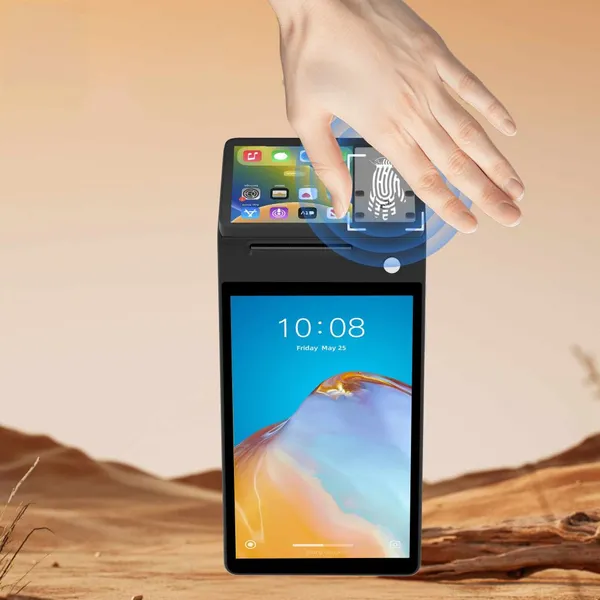
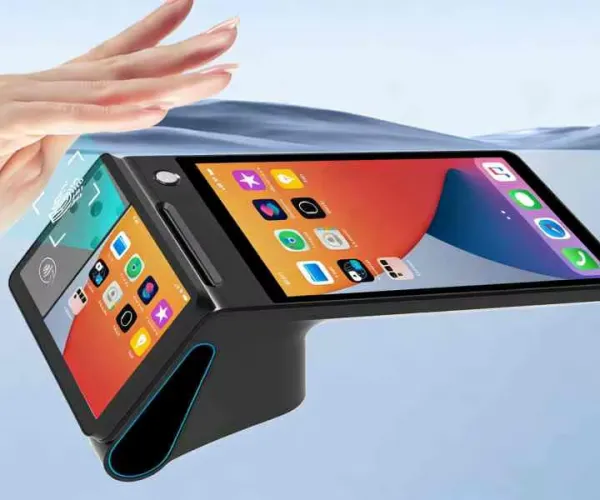
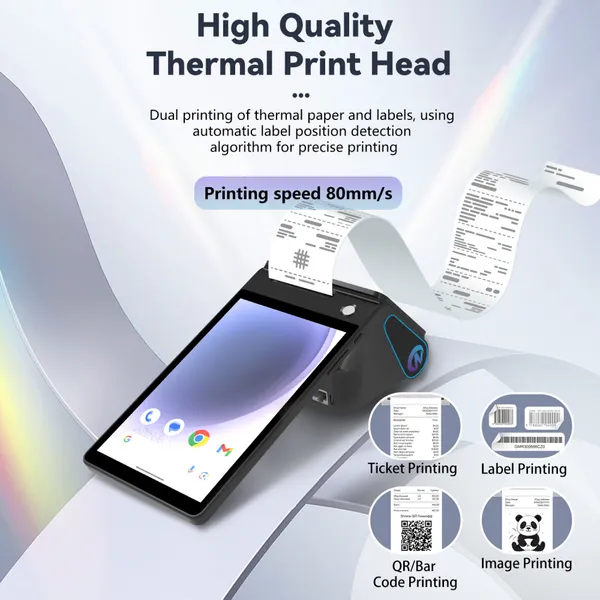
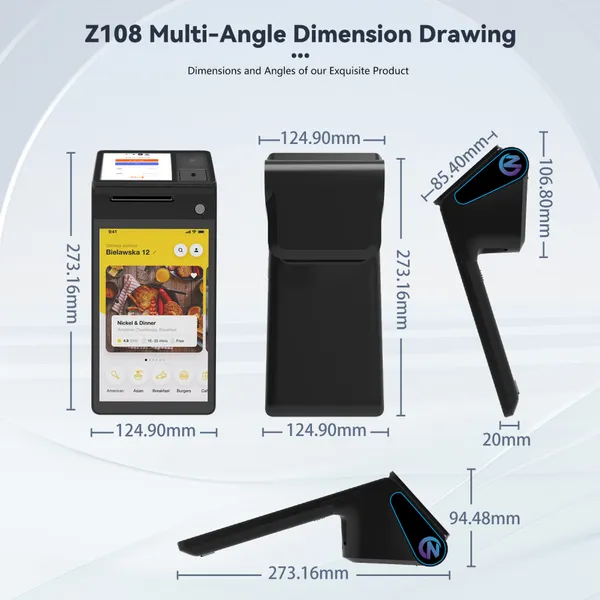
Z108P New Dual Screen Palm Vein POS, PDA Thermal Receipt Printer 5.6\" High Resolution and Clear Touch Screen Thermal Printer NFC for Chain RestaurantUS$ 219 - 309MOQ: 1 Unit
-
All-in-One Desktop Biometric Payment Barcode Scanner 2D 1D Handheld POS Terminal 5.5-inch Touchscreen PDA for Beauty & Clothing Chain StoreUS$ 219 - 309MOQ: 1 Unit
-
Z108P Secure Palm Vein POS System,Dual SIM PSAM Slot Multi-Port Terminal,EMV CE FCC Certified for Large Retail & Catering Business Handheld/DesktopUS$ 219 - 309MOQ: 1 Unit
-
Z92P Palm Vein Handheld POS Terminal, Android13 All-in-One Machine POS PDA Receipt/Label Printer,Symcode Android 14 Handheld POS Printer 3GB+32GBUS$ 219 - 260MOQ: 1 Unit
-
Z92P Portable Biometric POS Cash Register Receipt Printer, Handheld 4G PDA Terminal for Android 14 1D 2D Barcode Scanner Handhold POSUS$ 219 - 260MOQ: 1 Unit
-
Handheld Mobile POS PDA Terminal, 58mm Receipt Printer, WiFi Bluetooth, Perfect to Manage Queues, Online, Mobile & Takeaway OrdersUS$ 219 - 260MOQ: 1 Unit
-
Generic Handheld POS Receipt Printer High Speed 58/80mm Thermal Printer for Efficient Operation, Ideal for Retail Shops,Warehouse ManagementUS$ 219 - 369MOQ: 1 Unit
-
Hard Case Compatible With Square Handheld - Portable POS - NFC Machine Point of Sale Card Reader Travel Case (Black) Z108US$ 219 - 369MOQ: 1 Unit
-
PDA Handheld POS Terminal, 4G WiFi BT Mobile Computer With NFC, 3600mAh Battery, for Warehouse Inventory Logistics Retail POS, Desktop POSUS$ 219 - 369MOQ: 1 Unit
-
Hilitand Thermal POS Receipt Printer, Handheld POS Terminal With 3.95 Inch Touchable Customer-ScreenThermal Printing for Retail Stores SUNMI/ZONSUS$ 219 - 369MOQ: 1 Unit
-
POS PDA Receipt Printer Android 14 and 58mm High Speed Thermal Printer 8'' Touch Screen. Handheld Mobil Point of Sale Tablet Support 5GUS$ 219 - 369MOQ: 1 Unit
-
Desktop POS Terminal, 8 Inch HD Screen 88mm Thermal Printer 3600 MAh Android POS Compatible With Loyverse IREAP for Retail RestaurantUS$ 219 - 369MOQ: 1 Unit
-
Handheld PDA Printer Smart POS Terminal Portable Printers Intelligent Payment Terminal Function BT/WiFi/USB OTG/ 3G CommunicationUS$ 219 - 369MOQ: 1 Unit